Maintaining mobility becomes a top priority for many adults after 50. Many people choose anti-inflammatory foods or concentrated pills to manage discomfort. Comparing joint-health foods vs supplements requires looking beyond price to find the best financial value per useful nutrient.

Fatty fish, berries, and olive oil belong to a different category than isolated capsules. Although pills may seem cheaper, whole nutrition adds fiber, protein, and cardiovascular support. True value comes from the total health benefit your grocery budget provides.
This analysis can help you make informed choices about your daily routine and joint health after 50. These comparisons support better decisions, but they do not replace professional medical advice or treatment for chronic conditions.
Key Takeaways
- Evaluate value by calculating the cost per nutrient rather than the total price.
- Whole nutrition offers added benefits like fiber and protein that pills lack.
- Treat dietary choices and concentrated extracts as separate categories of investment.
- Lower prices do not always equate to higher long-term health value.
- Use cost analysis as a tool for planning, not as a medical diagnosis.
Define the Joint-Health Cost-Unit Question
A sound joint-health plan starts by calculating the cost per useful unit for your chosen option. Many shoppers confuse a bottle’s total price or grocery bill with its real value. Instead, check the active compounds supplied in each dose.
Explain What “Cost per Useful Unit” Means for Joint Health
The useful unit moves attention from the sticker price to the functional outcome. For inflammation, it may mean the milligram dose of curcumin or omega-3 fatty acids. When comparing dietary supplements, focus on compound concentration, not capsule weight.

Distinguish Food Portions, Supplement Servings, and Active Nutrient Doses
Comparing food with pills requires a careful look at how nutrients are delivered. A salmon serving supplies protein, vitamins, and minerals, along with omega-3s. A fish-oil capsule provides a concentrated extract, but its total oil may not equal its EPA and DHA amounts.
- Food portions: Provide a complex matrix of nutrients that work together.
- Supplement servings: Offer a standardized, isolated dose of a specific compound.
- Active nutrient doses: Represent the actual amount of the beneficial substance you consume.
Set a Fair U.S. Price-Comparison Basis for Adults Over 50
To make a reliable supplement cost comparison, use the same measures. Adults over 50 should track metrics that match their monthly spending habits. Standardized figures show which choices best fit your health goals.
Use Package Price, Serving Count, and Cost per Day
Track spending by finding your cost per day for every purchase. Divide the package price by servings, then adjust for servings used each day. This math can reveal whether a large, expensive container offers a lower cost per serving.
Separate Label Claims From Evidence-Supported Benefits
Packaging often promotes benefits without strong scientific support, so flashy claims need caution. A high cost per serving does not ensure better quality or results. For your supplement cost comparison, favor clinical evidence and base cost per day on effective doses from peer-reviewed research.
Joint-Health Foods vs Supplements: Establish the Comparison Rules
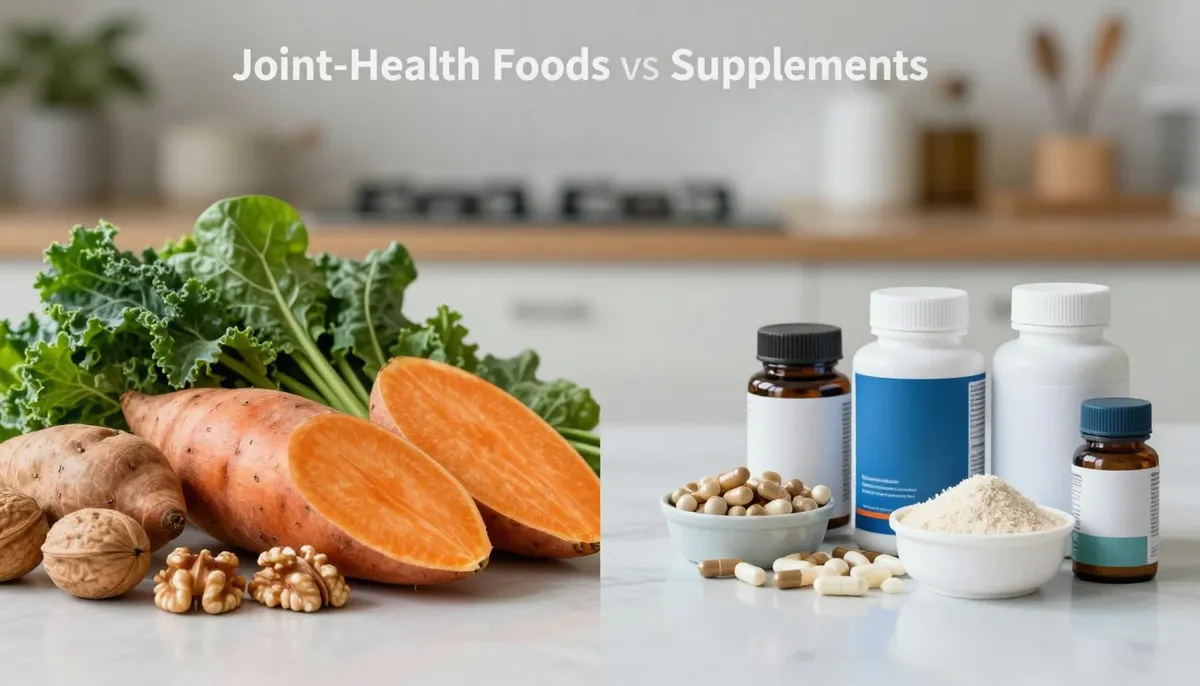
Comparing joint-health foods vs supplements fairly requires clear ground rules. A structured framework helps you find which option offers the best value for your needs. Objective measures support informed choices and long-term mobility.
Compare Foods and Supplements by Targeted Compounds
Compare these options by examining their specific active compounds. For example, compare omega-3 fatty acids in wild-caught salmon with those in a high-quality fish oil capsule. Likewise, compare curcuminoids in turmeric powder with those in a standardized curcumin supplement.
This approach compares the active ingredients that affect joint comfort fairly. Standardization shows how much of a compound you receive for each dollar spent.
Evaluate Anti-Inflammatory Potential Without Treating It as a Cure
It is vital to approach evidence-based joint health with realistic expectations. Some nutrients may help manage inflammation, but they cannot cure chronic conditions like osteoarthritis or rheumatoid arthritis. Use them to support comfort and function, not replace medical treatment.
Seeing these products as supportive measures helps you avoid overspending on “miracle” cures. Focus on daily comfort instead of expecting immediate, total relief.
Account for Whole-Food Benefits That Supplements Do Not Replicate
When you choose whole foods, you gain more than one active compound. The food nutrient density of a balanced diet creates a synergistic effect that isolated pills cannot match. These whole-food benefits support overall health beyond joint support.
Fiber, Protein, Minerals, and Cardiovascular Benefits
Whole foods provide a complex mix of nutrients that work together to improve health. Consider these advantages of choosing a food-first approach:
- Fiber: Essential for gut health and systemic inflammation control.
- Protein: Necessary for maintaining muscle mass, which protects your joints.
- Minerals: Magnesium, calcium, and potassium support bone density and nerve function.
- Cardiovascular Support: Heart-healthy fats and antioxidants improve circulation, which is vital for joint tissue health.
Standardized Doses and Convenience Advantages
Supplements offer clear advantages in precision and ease of use. They provide a standardized dose that is easy to track, especially with a busy schedule. For many people, a daily capsule supports better adherence than preparing meals.
Identify the Joint-Health Goal and Spending Limit
Building a plan for joint health after 50 starts with clear goals and firm financial limits. Before buying products, decide whether you want relief from occasional stiffness, exercise recovery support, or general nutritional maintenance.
Match the Purchase to Stiffness, Exercise Recovery, or General Dietary Support
Knowing what causes your discomfort helps you choose the right approach. If you have persistent joint pain, seek medical evaluation before trying over-the-counter solutions.
- Occasional Stiffness: Often managed through gentle movement and anti-inflammatory foods.
- Exercise Recovery: May benefit from targeted protein intake or specific recovery-focused nutrients.
- General Support: Best addressed through a balanced, whole-food diet that provides foundational vitamins.
List Current Medications, Health Conditions, and Dietary Restrictions
Safety comes first when choosing any health product. List your prescriptions and health conditions, including diabetes, kidney disease, or liver issues.
This list can reveal possible medication interactions caused by new supplements. Always ask a healthcare provider whether your plan fits your treatments and dietary needs.
Set a Monthly Budget Before Comparing Products
Clear finances help prevent impulsive spending on products with poor value. A firm monthly supplement budget helps you prioritize your spending.
Use a Daily Spending Ceiling Instead of Relying on Package Price
Do not trust the sticker price on a large bottle, which may hide its daily cost. Calculate a daily spending ceiling to track your daily health spending.
Reserve Room for High-Value Foods and Medical Care
Prioritize nutrient-dense whole foods and needed medical checkups. Treat supplements as additions, not replacements for healthy food or professional care. Saving money for quality ingredients can support long-term mobility.
Build a Baseline Cost for Anti-Inflammatory Foods
Managing joint inflammation starts with knowing your daily food costs. A clear baseline helps you choose quality ingredients and maintain a sustainable budget. Calculating the cost per serving helps you compare anti-inflammatory foods with confidence.
Calculate the Daily Cost of Fatty Fish
Adding fatty fish provides omega-3 fatty acids that support joint mobility. To find the true cost, look beyond the package price. Consider the usable protein and healthy fats each meal provides.
Compare Canned Salmon, Sardines, and Frozen Salmon by Serving
Canned salmon and sardines often provide the most economical high-quality nutrients. Their shelf-stable form reduces waste and preparation time compared with fresh fillets. Frozen salmon portions help control servings and keep monthly grocery spending predictable.
Price Extra-Virgin Olive Oil, Walnuts, and Ground Flaxseed
High-quality extra-virgin olive oil supports many heart-healthy, joint-supporting diets. Price these items by the amount used in a standard recipe, not the bottle’s total cost. Evaluate walnuts and ground flaxseed by the ounce for the best value from plant-based fats.
Include Beans, Lentils, Leafy Greens, Berries, and Whole Grains
A balanced diet includes affordable staples with fiber and antioxidants. Beans and lentils cost less when bought in bulk or dry form. Leafy greens, berries, and whole grains add nutrients and health benefits at a low price.
Measure Cost per Half-Cup, Cup, or Standard Ounce
Standard measurements help you track costs accurately. Whether you measure grains by the half-cup or nuts by the standard ounce, stay consistent. This method shows which items provide the most nutritional density for each dollar.
Account for Frozen, Canned, Seasonal, and Store-Brand Options
Choose store brands or frozen produce to lower expenses. Seasonal fruits and vegetables often cost less and offer peak freshness. Canned pantry staples help you keep healthy ingredients available without spoilage.
| Food Item | Typical Unit | Estimated Cost |
|---|---|---|
| Canned Sardines | 3.75 oz tin | $1.50 - $2.50 |
| Extra-Virgin Olive Oil | 1 tablespoon | $0.30 - $0.50 |
| Dried Lentils | 1/2 cup cooked | $0.20 - $0.35 |
| Frozen Blueberries | 1 cup | $0.80 - $1.20 |
Measure the Cost of Food-Based Anti-Inflammatory Compounds
Understanding the true cost of food-based nutrition means checking prices for compounds such as omega-3s and polyphenols. These nutrients support a healthy diet, but prices vary by quality and source. Strategic shopping helps protect your budget while prioritizing high-quality nutrients.
Calculate Omega-3 Costs From Salmon, Sardines, and Trout
To price omega-3 EPA DHA, compare its amount in different types of fatty fish. Wild-caught salmon often costs more than canned sardines or frozen trout. Still, all three provide plenty of omega-3s, so compare cost per gram instead of price per pound.
Estimate Polyphenol Costs From Berries, Extra-Virgin Olive Oil, and Green Tea
Polyphenols are common in colorful produce and healthy fats. Adding extra-virgin olive oil to meals provides a steady source, but prices vary by origin and extraction method. Fresh berries and high-quality green tea also offer value when used before they spoil.
Compare Curcumin-Rich Turmeric With Culinary Turmeric Use
Many people ask whether cooking with turmeric offers the same benefits as a concentrated supplement. Culinary turmeric adds flavor and some health benefits, but it rarely matches a standardized extract’s strength.
Explain Why Culinary Amounts and Supplement Doses Are Not Interchangeable
Culinary turmeric curcumin levels are usually too low to reach therapeutic thresholds cited in clinical research. Supplements isolate specific compounds, while cooking uses the whole root or powder. A pinch of spice in curry does not equal a high-dose capsule.
Include the Cost of Preparing Balanced Meals
A meal’s final price includes more than raw ingredients. You must also count kitchen time and food waste when items are not used promptly.
Factor in Cooking Time, Waste, Storage, and Restaurant Substitutions
Meal planning reduces the need for costly restaurant substitutions. Properly storing fresh produce and fish prevents waste and lowers the daily cost of your anti-inflammatory strategy.
| Ingredient Category | Primary Benefit | Cost Factor |
|---|---|---|
| Fatty Fish | Omega-3 EPA/DHA | High (Per Serving) |
| Extra-Virgin Olive Oil | Polyphenols | Moderate (Per Bottle) |
| Culinary Turmeric | Flavor/Antioxidants | Low (Per Use) |
| Fresh Berries | Polyphenols | High (Per Season) |
Calculate Supplement Costs by Active Ingredient and Serving
To judge the true cost of dietary supplements, look beyond the bottle’s price. A larger bottle may not offer better value; compare the cost per serving of its active compounds. Focus on the dose, not pill count, to make wiser spending choices.
Price Fish-Oil and Algal-Oil Supplements by EPA and DHA
For fish oil supplements, the total oil in each capsule may not matter. Health benefits come from its omega-3 EPA DHA content. Check the supplement facts label for milligrams of these fatty acids per dose.
Compare Total Fish Oil With the Actual EPA-and-DHA Amount
A bottle may list 1,000 mg of fish oil but provide only 300 mg of combined EPA and DHA. A higher daily dose may require three or four capsules to reach your target. That can cost more each day than a pricier, more concentrated product.
Evaluate Curcumin Supplements by Standardized Curcuminoid Dose
The market for turmeric curcumin is large, but products differ in strength. Check the label for a standardized curcuminoid percentage and a consistent active dose. Without standardization, comparing brand value is difficult.
Check Formulation Details Such as Bioavailability Ingredients
Curcumin is hard for the body to absorb alone. Manufacturers may add black pepper extract or lipid-based systems to improve bioavailability. These additions can raise the price, but better systemic absorption may lower the cost per serving.
Compare Glucosamine, Chondroitin, and MSM by Daily Serving
When evaluating glucosamine chondroitin MSM, check the total daily amount. Large tablets may require several doses each day. For a full month, multiply the bottle price by bottles needed to meet the recommended daily intake.
Separate Joint-Comfort Claims From Anti-Inflammatory Claims
Joint-comfort claims do not equal anti-inflammatory results. Glucosamine and chondroitin are mainly studied for structural support and cartilage maintenance. Other compounds target systemic inflammation, so keep these goals separate when planning your budget.
Include Capsules, Powder, Shipping, Subscriptions, and Serving Adjustments
Include shipping fees and possible subscription savings in your regimen’s final price. For capsules or powders, count exact servings and adjust for serving changes. This math gives a clearer view of your long-term investment.
| Supplement Type | Primary Metric | Key Cost Factor |
|---|---|---|
| Fish/Algal Oil | EPA + DHA mg | Concentration per capsule |
| Turmeric/Curcumin | Curcuminoid mg | Bioavailability additives |
| Glucosamine/MSM | Daily gram dose | Servings per container |
Run a Dollar-by-Dollar Food-versus-Supplement Calculation
Comparing joint-health foods vs supplements starts with clear math. Break down each expense to find the best value for your health goals. This approach removes guesswork from your wellness routine.
Create a Cost-per-Day Formula
To find your true cost per day, set a consistent baseline. Then, compare products fairly, despite different packages or marketing claims.
Divide the Purchase Price by Total Servings
Start by dividing the package price by its listed number of servings. If fish oil costs $30 and contains 60 servings, each serving costs $0.50. This standardized unit price anchors your budget analysis.
Divide the Daily Cost by the Relevant Nutrient or Active Dose
Next, check the active compound amount in each serving. For omega-3 EPA DHA, divide cost per serving by the total milligrams of those fatty acids. This shows the price of the active ingredient, not filler material.
Compare a Salmon-and-Lentil Meal With an EPA-and-DHA Supplement
When you assess wild-caught salmon and lentils, you pay for protein, fiber, and healthy fats. The grocery cost may seem higher, but this meal often offers greater nutritional density than one pill. An EPA-and-DHA supplement provides a trackable dose but lacks whole-food fiber and micronutrients.
Compare Olive Oil, Berries, and Walnuts With a Curcumin Capsule
Daily extra-virgin olive oil, fresh berries, and walnuts provide many polyphenols and antioxidants. Together, these foods support overall health in ways one curcumin capsule cannot match. The capsule targets specific inflammation concerns, while food offers a broader base for long-term wellness.
Show Monthly and Annual Spending for Each Strategy
Track spending over time to see how small daily differences affect your finances. A modest daily gap can become significant over a full year.
Use Conservative, Moderate, and Higher-Cost Scenarios
Your monthly supplement budget should reflect different shopping habits. Conservative estimates use store-brand items and bulk purchases, while higher-cost plans include premium, third-party tested products and shipping fees.
| Strategy Type | Daily Cost | Monthly Total | Annual Total |
|---|---|---|---|
| Conservative Food | $3.50 | $105.00 | $1,260.00 |
| Moderate Supplement | $1.50 | $45.00 | $540.00 |
| Premium Combined | $5.00 | $150.00 | $1,800.00 |
This supplement cost comparison shows that pills often cost less, but they cannot replace the complete benefits of a balanced diet. Your choice depends on your health priorities and available financial resources.
Adjust the Math for Nutritional Value and Evidence Strength
When evaluating joint health, a product’s raw cost rarely shows its full benefit. Make informed choices by looking beyond simple price tags. Consider the long-term value of different nutritional sources.
Credit Foods for Nutrients Beyond the Target Compound
Whole foods offer nutrients that isolated pills cannot fully replicate. Salmon, lentils, and leafy greens provide more than one anti-inflammatory compound. They also supply high-quality protein, essential fiber, and vital minerals that support overall food nutrient density.
These whole-food benefits support cardiovascular health and metabolic function, which can help joint longevity. Counting these nutrients often makes a healthy meal’s effective cost much lower than a single-ingredient supplement.
Discount Products With Weak, Mixed, or Condition-Specific Evidence
Not all supplements are equal, and limited research can increase financial risk. Use caution with products lacking robust, evidence-based joint health data. A product may fail if its label dose differs from the dose used in clinical trials, regardless of price.
Review Third-Party Testing and Ingredient Standardization
Quality control helps determine a supplement’s true value. Choose brands with third-party testing to confirm their labels match their contents. Standardization ensures every capsule contains the same amount of active compounds, so you avoid paying for fillers or uneven batches.
Compare Cost per Plausible Benefit Rather Than Cost per Capsule
The final step in your supplement cost comparison is calculating the cost per plausible benefit. Rather than ask about one pill’s price, ask what you pay for a scientifically supported outcome. This approach helps you avoid products offering little beyond a placebo effect.
| Comparison Metric | Whole Foods | Standard Supplements |
|---|---|---|
| Nutrient Variety | High (Broad spectrum) | Low (Isolated) |
| Evidence Strength | Strong (Long-term) | Variable (Condition-specific) |
| Value Basis | Cost per nutrient density | Cost per active dose |
| Quality Assurance | Natural/Regulated | Requires Third-Party Verification |
Account for Convenience, Adherence, and Individual Preferences
When comparing joint-health foods vs supplements, your daily routine often shapes long-term success. Price matters, but your investment’s true value depends on how consistently you follow the plan. Travel, cooking time, and taste affect your choices, costs, and results.
Calculate the Financial Impact of Missed Servings
An unopened pill bottle or wilted spinach makes your effective cost per day higher. If you buy a month’s supply of supplements but take them for only twenty days, the price per serving rises fifty percent. Consistency is the most critical factor in your financial planning.
Compare Meal Preparation With Grab-and-Go Supplement Routines
Meal preparation offers important whole-food benefits, but it takes time and planning. If your schedule is hectic, planned meals may create stress instead of support. Conversely, dietary supplements offer a convenient, grab-and-go option for busy mornings.
| Factor | Food Strategy | Supplement Strategy |
|---|---|---|
| Preparation Time | High | Low |
| Storage Needs | Fridge/Pantry | Cool/Dry Cabinet |
| Travel Ease | Difficult | Excellent |
Consider Taste, Digestive Tolerance, Storage, and Travel
Personal comfort strongly affects whether you follow your routine. If fish oil upsets your stomach or a vegetable tastes bad, you may stop eating it. Travel and holidays can also disrupt established health routines.
Identify When a Supplement May Fill a Dietary Gap
Supplements help most when they address deficiencies your diet cannot cover. If cost or access limits fatty fish, a high-quality omega-3 capsule can fill that gap. It provides needed nutrients without forcing an unsustainable diet change.
Identify When a Food Upgrade Can Replace a Low-Value Purchase
Replacing a low-value, processed snack with nutrient-dense food can be the best financial move. Swap a sugary treat for a handful of walnuts or berries to support joint health and reduce inflammatory ingredients. This change benefits both your budget and your body.
Use a Two-Week Tracking Sheet for Cost, Adherence, and Symptoms
Use a simple tracking sheet for fourteen days to learn what fits your lifestyle. Record daily spending, planned servings you consumed, and changes in how you feel. This data shows the reality of your habits.
“The greatest wealth is health, and the greatest investment is the consistency with which we maintain it.”
— Anonymous
Review the sheet to find patterns that cause waste or show success. If you often skip supplements, consider a food-based approach you enjoy more. If cooking feels burdensome, a streamlined supplement routine may better support your long-term wellness.
Apply Safety Checks Before Choosing Either Strategy
Choosing between food-based nutrition and concentrated supplements requires a clear view of possible health risks. Many people seek relief from joint pain, but supplement safety must guide every choice. Before starting, consult a healthcare provider who understands your medical history.
Review Fish Oil and Omega-3 Precautions With a Clinician
High-dose fish oil supplements can thin blood and may risk people who take anticoagulant medications. A clinician can check your dose and explain possible effects on natural clotting. Always report supplement use during routine check-ups to help prevent unexpected complications.
Check Curcumin, Glucosamine, and Chondroitin for Medication Interactions
Popular options such as turmeric curcumin and glucosamine chondroitin MSM help some people, but they can cause medication interactions. These compounds may change how your liver handles prescription drugs or affect blood sugar management tools. Verify that these ingredients fit your current treatment plan.
“The dose makes the poison, especially when concentrated extracts are used in place of whole foods.”
— Clinical Nutrition Advisory
Address Allergies, Kidney Disease, Liver Disease, Diabetes, and Surgery Plans
Your health status can change the risks of common supplements. People with kidney or liver disease should take care, because concentrated ingredients may strain these organs. If surgery is scheduled, tell your surgeon about every supplement; some may increase bleeding or affect anesthesia.
Understand Why “Natural” Does Not Mean Risk-Free
Many people wrongly believe that “natural” products are always safe. Whole foods provide balanced nutrition, but concentrated extracts may deliver far more than a typical diet. This strength can cause harmful reactions in sensitive people, so natural origins do not guarantee safety.
Seek Medical Evaluation for Swelling, Severe Pain, or Loss of Function
Self-directed supplement experiments should not replace professional medical care when symptoms become severe. If you have persistent swelling, sharp pain, or loss of function, seek medical evaluation at once. These signs may point to problems that need more than diet or supplement changes.
| Supplement Type | Primary Risk Factor | Consultation Required |
|---|---|---|
| Fish Oil | Blood thinning | Yes, if on blood thinners |
| Curcumin | Liver/Medication interaction | Yes, if on chronic meds |
| Glucosamine | Blood sugar impact | Yes, if diabetic |
| Chondroitin | Allergic reactions | Yes, if history of asthma |
Conclusion
Managing joint health after 50 means understanding your budget and nutrition needs. Comparing joint-health foods vs supplements helps you choose the best value for your lifestyle.
Whole foods provide broad nutrients that support overall wellness. Supplements offer targeted, standard doses to fill gaps in your daily diet. Read labels carefully and seek evidence-based joint health choices for real results.
Prioritize supplement safety by discussing your medicines with a healthcare provider. This can prevent dangerous interactions and help your plan support long-term goals. Consistent use matters most for measurable improvements in physical comfort.
Persistent joint pain or sudden loss of function needs a professional medical evaluation. A doctor can tell whether your symptoms need clinical care beyond dietary changes. Choose a strategy you can afford, tolerate, and maintain each day.
FAQ
What does “cost per useful unit” mean when comparing joint-health products?
For adults over 50, cost per useful unit means the price of the active compound that provides the benefit. It does not mean the price of the entire package. For Nordic Naturals Fish Oil, compare EPA and DHA milligrams per serving, rather than total oil weight, against StarKist Sardines for a clear comparison.
Why is it important to distinguish between food portions and supplement servings?
A food portion, such as a four-ounce Atlantic Salmon fillet, provides a complex mix of protein, vitamin D, and selenium. By contrast, Osteo Bi-Flex provides standardized doses of glucosamine and chondroitin. Though cheaper daily, it lacks whole-food fiber and cardiovascular support found in Blue Diamond Almonds or Bob’s Red Mill Lentils.
How can I calculate a fair price comparison for anti-inflammatory compounds?
Divide the package price by the total number of days the product lasts. Measure California Olive Ranch extra-virgin olive oil by the tablespoon. This limit helps fixed-budget consumers judge whether Gaia Herbs curcumin costs more than daily McCormick Culinary Turmeric and black pepper.
Does culinary turmeric offer the same joint-health benefits as a curcumin supplement?
No. Culinary amounts and supplement doses are not interchangeable. Cooking with turmeric is healthy, but Thorne Curcumin Phytosome offers higher bioavailability. Its active curcuminoids absorb more easily, so cost analysis must ask whether culinary spice matches levels used in clinical research.
Can I replace my joint-health supplements with a diet rich in fatty fish and berries?
Many adults over 50 may get enough omega-3 fatty acids and polyphenols from high-value foods. Replacing a low-concentration supplement with Wild Planet Canned Salmon or Driscoll’s organic blueberries can provide greater nutritional value. Yet allergies, limited cooking time, or medical needs may require supplements with standardized doses that food cannot easily provide.
What safety precautions should be taken before starting a new joint-health regimen?
Before starting fish oil or curcumin protocols, consult the Mayo Clinic or a primary care physician. These substances can interact with Warfarin and other blood thinners. Natural does not mean risk-free; people with kidney disease, diabetes, or planned surgery must confirm a safe plan.
How does third-party testing affect the value of a supplement?
NSF or USP third-party testing confirms that label ingredient standards match the bottle’s contents. For Kirkland Signature Glucosamine, this certification raises the likely benefit per dollar. Without verification, consumers may pay for fillers or wrong doses, lowering value regardless of retail price.
How do missed servings impact the overall cost of a joint-health strategy?
Missed servings can greatly increase costs, and grab-and-go supplements provide value only when used consistently. If expensive Whole Foods Market produce spoils, its cost per useful unit rises sharply. A two-week tracking sheet can monitor use and symptoms, showing whether meal prep or supplements better fit their lifestyle.