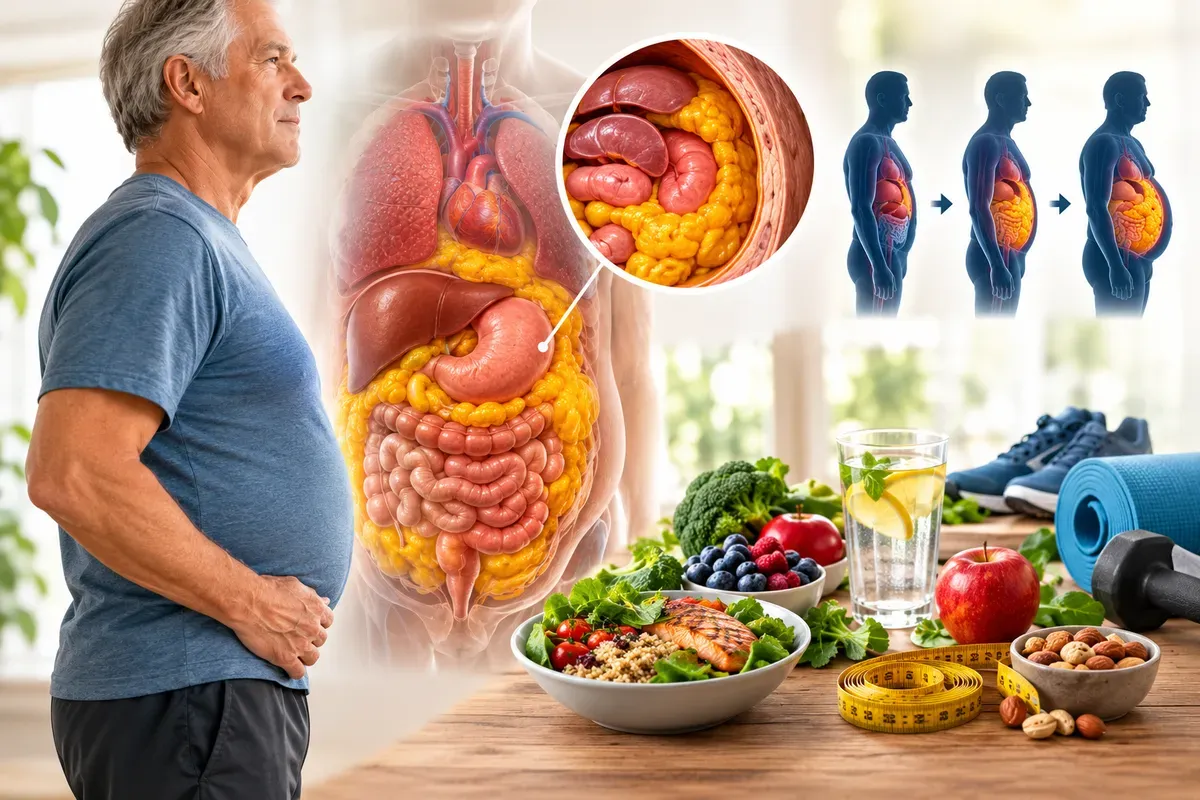
After 50, falling estrogen or testosterone plus rising cortisol redirect fat deep around the liver and intestines. Visceral fat is metabolically active — it raises blood sugar, pressure and inflammation — which is why waistline matters more than weight now.
Key Takeaways
- Hormones redirect fat viscerally after 50
- Waist beats BMI as the risk gauge
- Protein + walking + lifting + sleep
Why Belly Fat After 50 Is Different
Hormonal shifts, sleep loss and muscle decline converge: less muscle burns less, poor sleep raises ghrelin, and stress stores centrally. Men and postmenopausal women gain fastest.
After 50, muscle mass declines about 1 to 2 percent per year without resistance activity, and since muscle drives resting metabolism, daily calorie needs quietly shrink. Gut absorption efficiency can also dip.
Health Risks Worth Knowing
A waist over 40 inches (men) or 35 (women) predicts metabolic syndrome better than BMI. Fatty liver, prediabetes and hypertension usually travel with it — all reversible early.
The fundamentals still dominate: adequate protein, fiber-rich plants, daily walking plus twice-weekly resistance work, 7 to 8 hours of sleep, and front-loaded hydration.
Safe, Sustainable Ways to Trim It
Prioritize protein, daily brisk walking, two resistance sessions, alcohol limits, and 7-plus hours of sleep. Expect half to one pound weekly; faster loss after 60 usually costs muscle.
Metabolism blends with green-tea catechins, ginseng or probiotics are popular, but effects are modest next to habits. People with thyroid, heart or liver conditions should check with a clinician first.
Why Strict Diets Fail Over 60: sustainable care
Continue your research with our related in-depth guide on this topic — part of the Health50 Digest series.
A faster-feeling metabolism after 50 is built from unglamorous basics: protein, fiber, muscle, sleep and water. Support products can complement — never replace — those foundations. Measure progress in energy and waistline trends, not day-to-day scale noise.
Medical Disclaimer: This article is for educational purposes only and is not medical advice, diagnosis, or treatment. Always consult your physician or dentist with questions about your health.