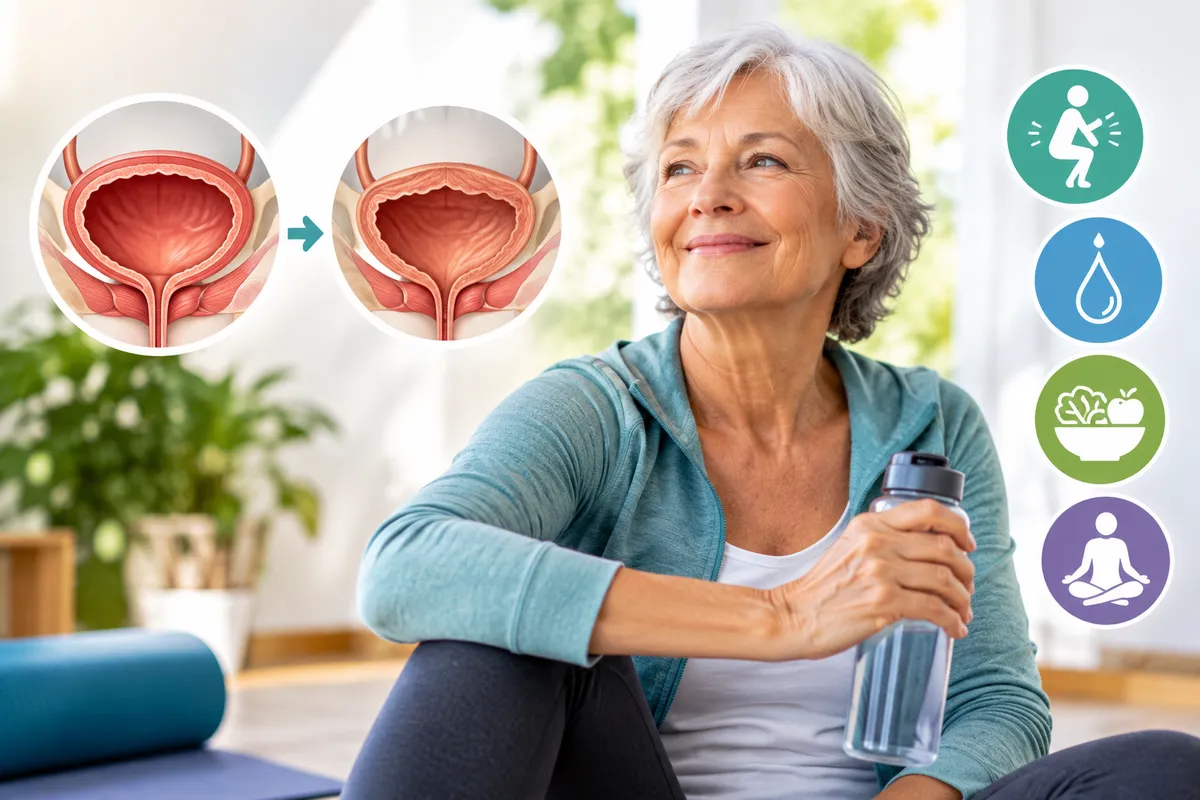
The bladder wall is muscle — the detrusor — and after 60 it often becomes both weaker and twitchier: squeezing less effectively while signaling urgency earlier. The good news is that bladder habits are trainable at any age.
Key Takeaways
- Weaker squeeze + earlier urgency is typical
- Scheduled voids retrain capacity
- Daily Kegels help within weeks
Why the Bladder Weakens With Age
Aging reduces detrusor contractility while the prostate adds outlet resistance — a double hit producing weak stream plus urgency. Capacity also shrinks as the wall stiffens.
After 50, hormonal shifts — especially the conversion of testosterone to DHT — gradually enlarge the prostate in most men. A larger gland presses on the urethra, which is why stream and frequency change.
Bladder Training Basics
Bladder training means scheduled voids with gradually stretched intervals, urge-suppression techniques (freeze, squeeze pelvic floor, breathe, walk calmly), and no just-in-case peeing that teaches small capacity.
Daily habits carry surprising weight: timed fluid intake, regular low-impact exercise, less evening alcohol and caffeine, and healthy weight all correlate with fewer urinary symptoms.
Pelvic Floor Exercises for Men
Kegels work for men: identify the muscles by stopping gas, then do 3 sets of 10 slow squeezes daily plus quick flicks. Most men notice control gains within 6 to 12 weeks.
Supplements with botanicals like saw palmetto or pygeum are widely used, but evidence is mixed. They never replace screening — blood in urine, inability to urinate, or severe symptoms warrant prompt medical care.
Exercise and Prostate Wellness: low-impact pelvic routines
Continue your research with our related in-depth guide on this topic — part of the Health50 Digest series.
Prostate changes are common, manageable, and worth monitoring. Track your symptoms, keep up annual checkups with PSA discussions, and pair smart daily habits with professional guidance. Early attention consistently leads to better outcomes.
Medical Disclaimer: This article is for educational purposes only and is not medical advice, diagnosis, or treatment. Always consult your physician or dentist with questions about your health.